
8 underrated books you should maybe read
Strange, obscure, and surprising books that shaped my worldview, from causality to cannibalism

8 books that you probably haven’t heard of that you should maybe read:
The Book of Why by Judea Pearl
Diary of a Madman by Lu Xun
My Secret Garden by Nancy Friday
Behind the Beautiful Forevers by Katherine Boo
Decisive by Dan and Chip Heath
Saga by Brian K. Vaughan
Anticipating Surprise by Cynthia Grabo
Transdimensional Brain Chip by Øyvind Thorsby
I have many books I love, and some more that I don’t like as much but have nonetheless changed who I am as a person. I’d love to write a deep treatise on each of them. Nonetheless, due to time, attention, and insight constraints, I’m unfortunately limited in my ability to write something deep and detailed in each of them.
In lieu of that, below I talk about eight books1 that I think the vast majority of my blog readers have probably not yet read and I think are nonetheless well worth reading.
The Book of Why by Judea Pearl
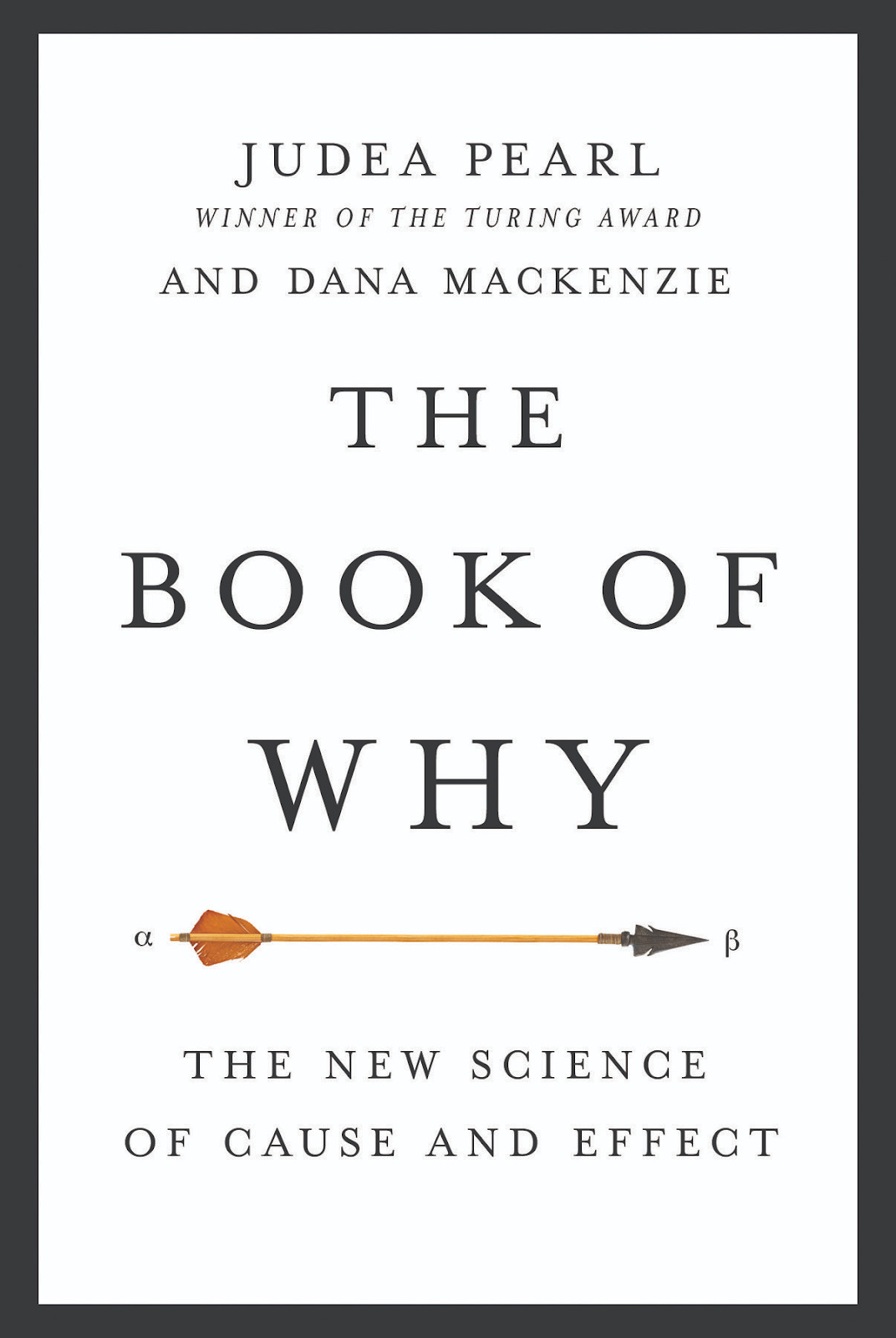
The book of why asks and answers some fundamental questions: What is causality? How can we formalize it?
Judea answers them with causal diagrams. They’re neat tricks. I don’t want to dive into them here2. Suffice to say, I think you should read the book! I think the book gave me a deeper understanding of causality and the ways that traditional statistics and causal inference go awry. I think it’s especially helpful in a large subset of questions I’m interested in: how to ask and answer moderately complicated questions in high-level social science. I think some of the lessons are so integrated into how I think about the world that I don’t even distinctly think about them.
The book does seem to overreach when talks about AI and attempts to tie in its causal models with new architectures or ways of doing AI. I’m fundamentally pretty skeptical of the approach, and the Bayesian ML family it comes from. I think AI models will probably benefit from understanding causality more, but I don’t see a strong reason to reject the bitter lesson. In practice, AI models will learn causality the same way as everybody else: reading (“pretraining on”) books and papers on causal inference (including Pearl’s!), with maybe some light tests against reality.
Diary of a Madman by Lu Xun

Lu Xun. What a great author.
If you talk to Chinese-Americans about Lu Xun, you’d usually get two responses:
“Who?”
“Eww gross”
This is because most people of Chinese descent, statistically, were forced to read him in school. He was the canonical 20th century literary author for kids growing up in Communist China. Mostly for political reasons. So many Chinese people developed neuroses around Lu Xun’s writings.
Fortunately I grew up mostly in the US, and developed entirely different sets of neuroses before coming across Lu Xun in high school. And the guy could write bangers. Diary of a Madman is no exception. It’s an elegantly haunting story about a man who starts seeing increasingly insane subtext in the classical Chinese texts, including (spoilers) injunctions for cannibalism.
The political implications, including digs at traditional Chinese society and thus pro-modernity (aka Communism) messaging, were not at all subtle. I enjoy it both on a literary level and as a (hilariously dark/misguided) political tract. Solid stuff.
I’m not sure where the best translation is, but there’s a nice one up on marxists.org, a site I’ve likely never linked to before and probably never will again.
My Secret Garden by Nancy Friday
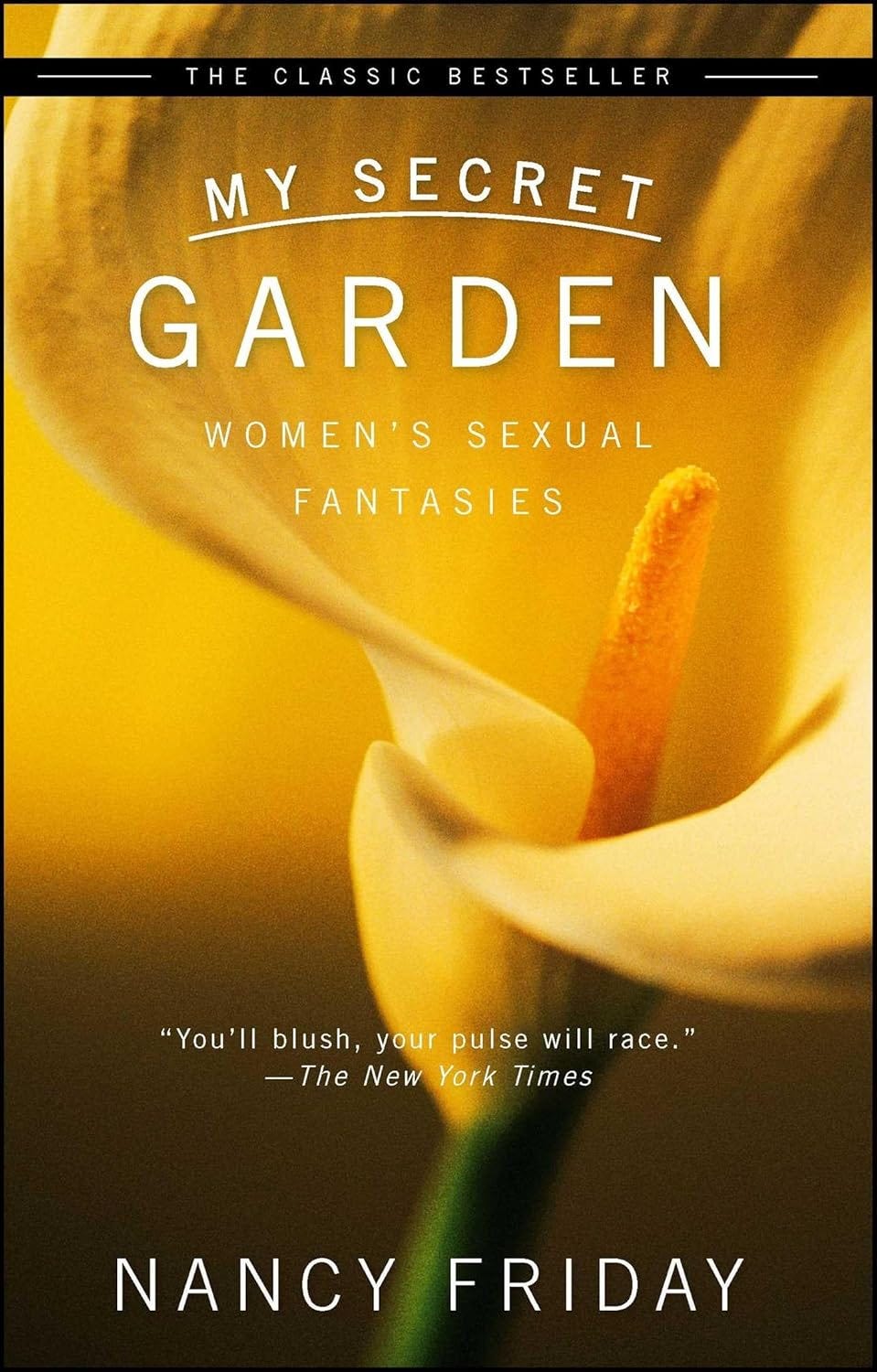
When I was 25 I came across a colleague who was simultaneously way more well-read than me (rare) and more gregarious than me (common). I asked what book he’d recommend to me that could benefit my life. He thought for a long time, then took a copy of My Secret Garden from his bookshelf and shoved it in my hands. He was right!
My Secret Garden is a collection of various, and quite detailed, women’s sexual fantasies through letters and tapes and personal interviews. At 25, my understanding of this topic was, alas, largely theoretical. I thus found the book illuminating about the range and detail of sexual fantasies in general, and women’s fantasies in particular.
A reader might reasonably ask: Why not just read quantitative analysis of surveys of sexual preferences and fetishes by Aella? I have two simple answers:
I think reading the detailed stories gives much more qualitative flavor and deeper imagery/understanding than dry summaries of the data
At the time I read the book, Aella surveys weren’t around!
One way the book was a bit personally sad for me was that almost none of the fantasies seemed particularly sexy to me. Most of them are sufficiently different from my own interests that they were more informative than titillating on a personal level.
This is in sharp contrast to sexual fantasies that partners or people I’m flirting with shared with me, or ones from unusually open women friends. My guess is that this has less to do with social changes in the last 50 years, and more to do with selection bias in which fantasies people share with me, versus have in private.3
I suppose this makes sense. But it’s still at some level sad that there isn’t a higher correlation between different people’s darkest deepest fantasies. Ah well.
Behind the Beautiful Forevers by Katherine Boo
Behind the Beautiful Forevers is a narrative nonfiction book that follows the lives of residents in Annawadi, a dense, three acre slum near the Mumbai International Airport. It’s achingly beautifully written, and really gets under your skin about the hopes and dreams of people in extreme urban poverty, and how much extreme poverty can dash your very reasonable hopes for your life.
Back when I was primarily motivated to reduce global poverty, it was an important rallying call. Even today, I find the book moving in recognizing both my common human and my exorbitant privileges, and helps contextualize my desire to fight for a better world. I’d recommend the book to people interested in understanding poverty on a personal level, as well as any of my readers who happen to be human.
Fun anecdote about the book: I’ve talked about this book to many people. Every single person who has not actually read the book, and most who have, gets the title wrong. And I do mean everybody! It’s Behind the Beautiful Forevers, not Beyond. And it being “behind” is quite meaningful for the setting and theme! But everybody gets it wrong, like the Berenstain Bears, or Nelson Mandela’s time of death. Fascinating stuff.
Decisive by Dan and Chip Heath
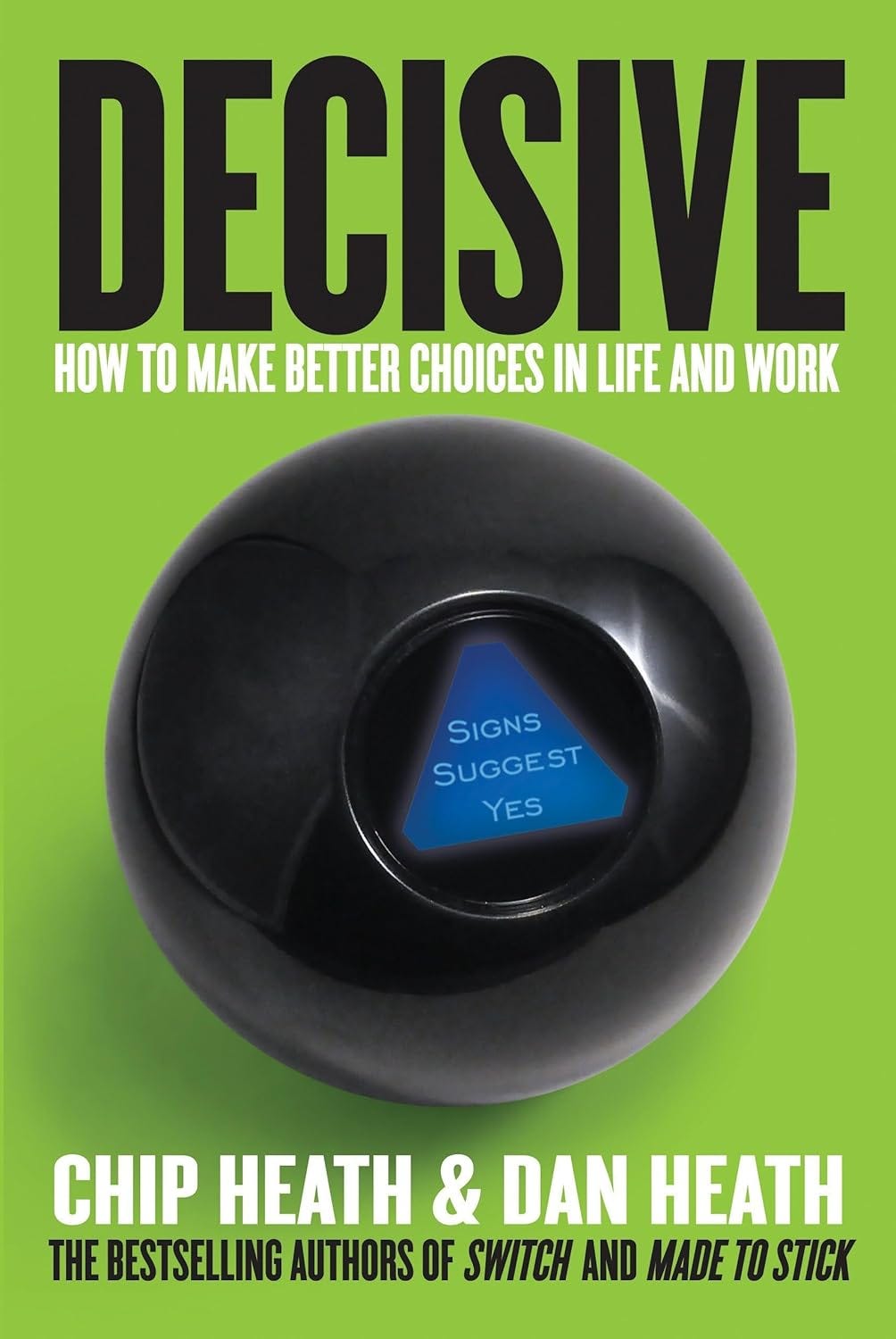
A book that probably should be in the rationalist canon but for some reason isn’t, Decisive by the Heath brothers is a great look into: a) how do people fail to make good decisions? How can you make better ones?
The language is somewhat fluffy at times but it’s not unusually egregious compared to many other books of business psychology.
I have more detailed notes here, but their core principles can be summarized as trying to avoid what they call the “4 villains of decision-making”:
Narrow framing
Solution: Widen your options
Confirmation bias
Solution: Reality-test your assumptions
Short-term emotion
Solution: Attain Distance Before Deciding
Overconfidence
Solution: Prepare to be wrong
What I especially like about the book is #1 and the concrete and practical emphasis on ways to increase your option set, rather than make better decisions among the narrow sets of choices you were originally considering. I think this is vastly underrated in modern decision-making, including in my own life. Whenever you feel stuck between two choices, you should always first consider whether it’s a false dilemma, and how to expand your option set.
“Babble” is another related framing, as is the generator/discriminator model in machine learning.
The other tips are good too, though I see them more often in other areas of the rationalist canon.
Saga by Brian K. Vaughan and Fiona Staples
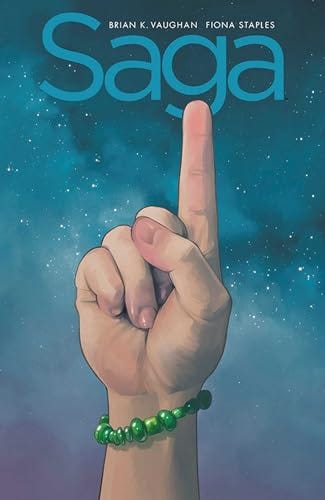
A graphic novel that combines themes from Star Wars, Game of Thrones, Romeo and Juliet. Beautifully written, beautifully drawn. The books chronicle the fate of star-crossed lovers from long-warring alien species (one highly technological, the other with magical powers), as they flee authorities from both sides of the war with their newborn daughter Hazel.
Along the way, the three of them encounter strange planets and strange aliens. Many who want to kill them, but many kind-hearted folks as well.
It’s heavily implied that their love itself is forbidden knowledge for both sides of the war, and Hazel’s very existence a rebellion against the forever war. Simplistic perhaps, but also a very beautiful premise that was very well-executed.
Overall, a beautiful saga about the human condition told through weird locales and weirder aliens. Highly recommended!
Anticipating Surprise by Cynthia Grabo
Written by one of the earliest and most senior women intelligence analysts in the American intelligence apparatus before and during the Cold War, Anticipating Surprise is a manual for intelligence warnings and how they can go wrong for the US Intelligence Community. Finally declassified in 2004, I find it a riveting read despite its age.
In particular, the most common thread in mistakes in signals intelligence and warning is that often intelligence analyst would think that they’ve delivered a clear warning but higher-ups would not even recognize that a warning has been delivered. This just seems crazy to me! But it’s a major update to me that warnings ought to be unambiguous, loud, and repeated.
This is, of course, directly relevant to forecasting initiatives like Sentinel and BlueDot, but also to AI evals like METR, Apollo, and (to a lesser extent) Epoch.
In general, I think various desires to be subtler or hide behind ambiguous warnings can be bad. If something is truly worthy of warning (you also do not want to be the boy who cries wolf!) you should sound your clarion call loud and strong!
The rest of the book is good as well, full of many tidbits and fun anecdotes.
Transdimensional Brain Chip by Øyvind Thorsby
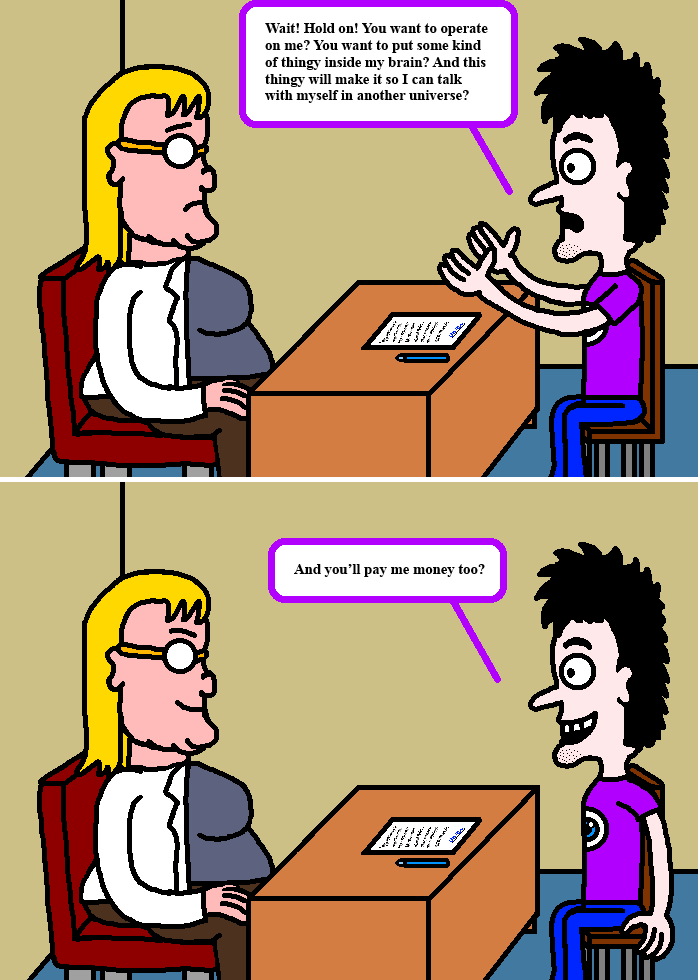
My favorite underrated web-serial. To quote TV Tropes: “a bumbling Idiot Hero named Ulf agrees to get a brain chip implanted in his skull. Once a week, the chip will “split” his consciousness across parallel universes, creating a Psychic Link between an exponentially increasing number of parallel selves.
The premise is rollickingly good, and it just gets better from there. Covers many questions I’m interested in, including multiverses, anthropic reasoning, and ethics.
Poorly drawn.
Due to time constraints, I did not reread any of these books while preparing for this review. I also tended to read 0-4 other reviews before my own, which is spending lower effort than usual for my book reviews.
(partially because it’d distract from the rest of the post and partially because I’m worried about messing them up).
Am I right? Unclear. If you’re unsure if it holds for you, feel free to DM me a fantasy of yours. For research purposes, of course.
Do you think the Judea Pearl book is better than other books on the same topic, or was it just the first book you read on the topic?
I read My Secret Garden recently; I found it hilarious and very sexy. I find it kind of hard to imagine a straight man who wouldn't find it sexy. Maybe you just have very specific interests, or I'm very easy to arouse.
My main problem with the book is that it's hard to know how representative the interviewed people are. If 5/100 women in the book are into x does that mean around 1-10% of women, in general, are into it? or does only 1 in 20.000 women have x as a fantasy, and Friday just went out of her way to find women with weird interests.
Still, it's an awesome book.