Five Books That Actually Changed My Life (Not The Ones I Wished Had)
And 25 books that might change yours

Books I’ve read in the past that were actually life-changing:
1. Anathem by Neil Stephenson
2. Famine, Affluence, and Morality by Peter Singer
3. Reasons and Persons by Derek Parfit
4. Animorphs by K. A. Applegate
5. Compassion by the Pound by F Bailey Norwood and Jason Lusk
The criteria for composing the list is by trying my best to actually think of books that nontrivially changed my life, rather than books I *wished* had changed my life, or books that I found the most enjoyable, or books that (trying to take the view of an impartial critic) I thought were the “best”/most well-written.
1. Anathem: I think the other books on this list plausibly have a stronger effect size, but I have the strongest certainty that this book changed me. Various small things in the book’s fictional world/alternative social structures stuck out to me, but the largest is the way the book’s characters treat news. Many of the characters were cloistered academics (avants), who deliberately and strictly avoided contact with the outside world so they can focus on what’s actually important (in the span of decades and centuries, rather than minutes and seconds). Before reading the book, I always felt it’s important to “be informed” and “aware” of all the going-ons in the world. I no longer believe this. I now think people (and the world) would be better off focusing on either the very broad (reading philosophy and history and classics from various cultures and other books that will stand the test of time), or the very specific and decision-relevant (ie, latest papers from their chosen sub-specialization, how your best friend or daughter is doing on that very day). And nothing in between.
These days, I block my FB and Twitter News Feed, actively try to stay away from news websites, and substantially avoid political discussions and gossip (with varying degrees of success).
2. Famine, Affluence, and Morality: I read FAM in high school. It helped me put altruism (particularly towards Less Developed Countries) in the forefront of my thoughts, rather than resting uneasily in the back of my mind. It’s unclear whether I would have been drawn to the Effective Altruism movement without reading FAM (another plausible story is that I would otherwise have gone from Lesswrong -> Givewell to EA even if I didn’t major in Econ, or I would have found the online utilitarianism forums somehow while bored).
That said, while there’s uncertainty in whether FAM brought me to Effective Altruism, I think there’s less in how important EA is to me. There’s a sense in which EA is by far the largest influence on my adult life. EA’s directly responsible for me finding my first partner, second, fourth, and fifth jobs, current house, and probably >50% of my new serious social connections. It’s the predominant lens I use to make long-term decisions.
3. Reasons and Persons: I read it in 2017, so in some sense it’s still “too soon to tell” if the book has a lasting and prolonged effect on me. To the extent it does, the two largest effects are on my views of population ethics (and indirectly, the value of averting existential risks) and personal identity (which I had some unusual opinions on before, but now I feel are more coherent).
4. Animorphs: Animorphs was plausibly the series of chapter books that first got me “hooked” on reading, and turned younger-me from a kid who split his time between daydreaming and math to a kid who split his time between reading and math.
I don’t know if the change was necessarily positive, but I think reading has become such a large part of my identity now (and even more so when I was younger) that asking whether reading was good or bad for “me” is almost a category error. Because I would, in both a colloquial and a Parfitian sense, be a very different person.
An especially obvious early effect is that my moral center quickly moved towards some vague mixture of late 20th/early 21st liberal American culture with vaguely consequentialist leanings. Which isn’t particularly coherent, but was probably more than whatever I had before.
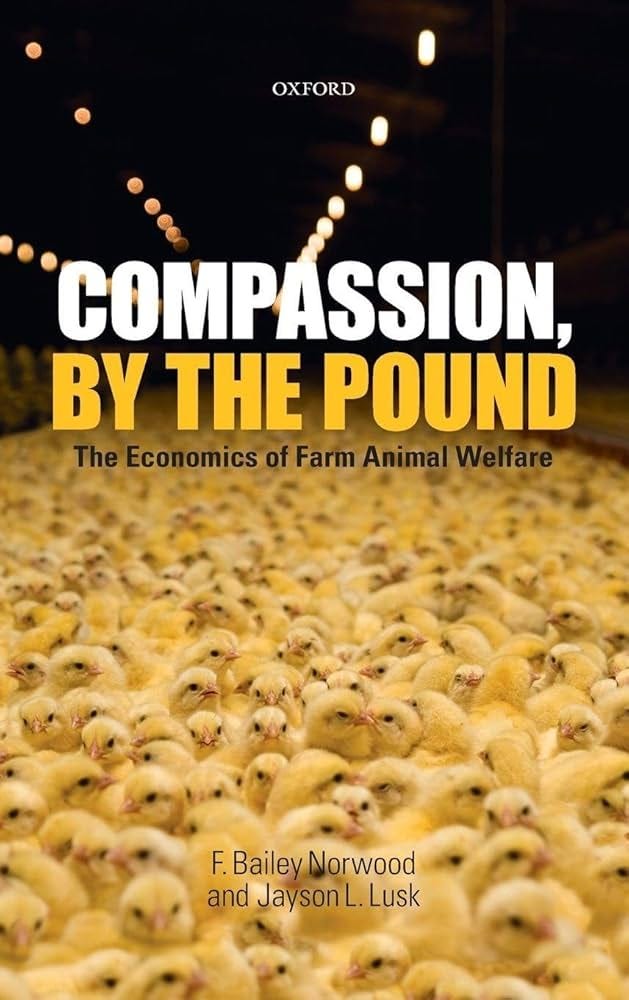
5. Compassion by the Pound: I don’t know if Compassion by the Pound had a large effect on me. I read it not long before I started working at Impossible, but I think I would have worked at IF anyway. One large update I had from the book is that before reading the book, I thought it was very difficult to have a large impact with research if you didn’t go to an elite institution or had other external evidence of being exceptionally talented, since research is so top-skewed. I no longer believe this. It feels naive that I didn’t seriously consider this before, but basically all Bailey and Lusk did was rigorously study a subject that wasn’t interesting to other economists (animal welfare), but had a huge impact outside of their field (on the welfare of billions of farmed animals). So there’s a sense in which people who aren’t exceptionally talented can still be exceptionally impactful at research as long as they’re willing to work on important but neglected/low-status fields.
Since reading the book I’ve worked for several years as a Researcher at Rethink Priorities, as well as generally making research, forecasting, data analysis and other intellectual contributions that are different levels of “insight-driven” since.
I also now believe that I’ve moderately underrated my own general level of talent, but I think the update about whether someone can be generally useful without exceptional talent is higher than the update about my own talent, and I recall the former update being sharper while the latter being somewhat gradual.
Books that might become life-changing for others
Books that were not life-changing for me, but I will still recommend to other people, because I really enjoyed them, because I think they’re likely to be life-changing for people who are not me, or because I think there’s potential for them to be life-changing for me in the future:
Cloud Atlas
House of Leaves
Kafka on the Shore
Sandman
Name of the Wind
The Algorithms Design Manual
Cracking the Coding Interview
Designing Data-Intensive Applications
Doing Good Better
Strangers Drowning
Culture Series (Iain M. Banks)
The Three-Body Problem
Behind the Beautiful Forevers
Foundation series by Asimov
Warhorses
Story of Your Life and Others
Exhalation
Thinking, Fast and Slow
Deep Work
The Signal and the Noise
Too Like the Lightning
UNSONG
The Precipice
Clear and Simple as the Truth
Autobiography by JS Mill
I’d recommend any of these 30 books to most people who’re considering them. If you’re seriously considering reading any of them, feel free to comment below with your use-case and I’ll try to provide tailored recommendations about whether the book is a good choice for you!
animorphs, wow. loved that. definitely made me more philosophical.
remnants and that fantasy world one, though I didn't finish either also probably made me a better thinker
I have a similar relationship to Animorphs. Also, one of the books had a conversation in which an Andalite expressed amazement that humans invented email after the telephone, and this has really stuck with me into my legal career (in which the sheer volume of email has caused problems for both my clients and the profession in general).
I also loved Anathem. It didn't change my life, but it was my entree into Neal Stephenson's oeuvre (and still my favorite of his books).